Call Corona de Oro a Preakness Stakes longshot if you want – he is 30-1 on the morning line – but he’s been beating odds since his first breaths.
Shortly after foaling the bay colt at Timber Town Stable in Lexington, Ky., his dam Lemon de Oro hemorrhaged. Rushed to a clinic with her newborn, she died and he went back to the farm an orphan. Thirty-six hours later, he was introduced to nurse mare Special Skippy. Part of the squad at HeavenSent Nurse Mares, which has farms in New York and Kentucky, Special Skippy accepted the foal as her own and accompanied him to breeder Caroline Stautberg’s Willow Oaks Farm in Jarrettsville, Md.
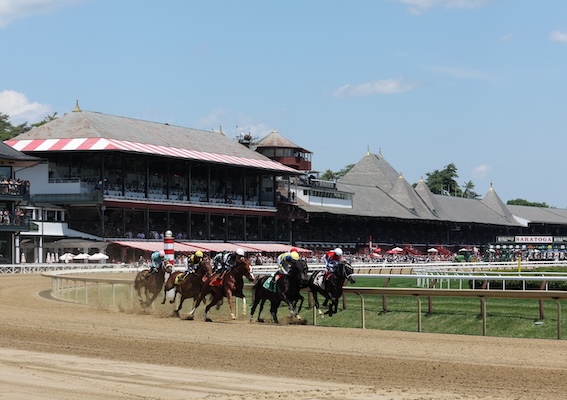
New mom and new son fell right into stride, taking the first steps toward his spot in the starting gate along with 13 others in Saturday’s $2 million Preakness at Laurel Park.
“He took to the mare right away and she took to him,” said Darin Martin, who manages Willow Oaks for Stautberg. “The two of them came back to our place when he was about 2 weeks old. They were the only ones here for a while because the other mares stay in Kentucky a bit longer to get re-bred. He was a neat guy to be around and she was nice. She raised him, did a great job.”
Uncommon but one of the many risks to raising Thoroughbreds, the loss of a dam used to be worse news for Thoroughbreds and their breeders. Like all newborn mammals, foals need the antibody-rich colostrum or first milk to help provide nutrition and protection from infection. Beyond that, mares provide actual protection, comfort, discipline and an example.
Farms and veterinary clinics can “bank” colostrum from mares, and – as in Corona de Oro’s case – collect it from a mare before she dies. In the absence of milk from his or her dam, a foal can be fed any number of formula products, but none of that is the same as actually growing up beside a mare. More and more frequently, farms turn to nurse mares as substitutes for biological mothers. Modern-day programs mix science and horsemanship to stimulate milk production in mares who aren’t pregnant. They’re on call for situations like the one facing Willow Oaks and Timber Town with Lemon de Oro. Farms pay a fee, the service delivers the mare, helps facilitate the introduction process and the farm treats the mare as its own until weaning time. Then the mare is returned to the nurse-mare farm.
“We have 230 mares between the two farms,” said Laura Phoenix of HeavenSent. “We never force the mares to take on a foal. You have to take it one at a time, get to know your mares and realize which ones you can take to clinics, which ones you can’t, which ones are good with newborns or better with older foals. A lot goes into it.
“For most of them it’s their third career (after racing and foal production), and look what they’re doing for the industry. They’re bringing honor to the nurse mare, where she used to be a secret. They’re like heroes.”
Special Skippy did her part to live up to that description. Bred by Patchen Wilkes Farm in Kentucky, she won four of 22 starts while racing mainly in low-level claiming races in the Midwest. As a broodmare, the daughter of Skip Away produced five foals (two of them winners) before falling through one of the many cracks in the Thoroughbred ecosystem and winding up in a Pennsylvania livestock auction. Rescued, rehabbed and adopted by HeavenSent, she raised foals in 2021, 2022, 2023 (Corona de Oro) and 2024. She died late that year at age 17.
Phoenix wishes she could walk out to the barn and tell Special Skippy all about her “son,” but will settle for the pride in a job well done. In every sense of the word, except blood, she’s the dam of a Preakness starter.
“She was a really solid mare that was kind-hearted, good to work with and good to her foals,” Phoenix said. “She would have given him some sass for sure. She was sweet, but sassy too. When they’re good mommas like she was, they’re good mommas.”
Though foaled in Kentucky, Corona de Oro gives Maryland another “local” Preakness runner along with the Laurel Park-based Taj Mahal. Corona de Oro lived in Maryland for about 17 months – arriving at just a few weeks old in March 2023 and leaving as a sleek sales prospect and future racehorse in August 2024.
Willow Oaks bred Grade 1 winner Funny Moon and a long list of other standouts from a broodmare band that used to reach into the 20s. Now, the farm raises between six and eight horses a year. A Preakness runner won’t change much, but comes with some pride.
“Every time you talk to someone and tell them what you do for a living they say, ‘Have you ever had a horse in the Derby or the Preakness?’ ” said Martin. “Now we can say yes. We’re very proud of him.”
The upbringing did little to change his trajectory. Like almost all of the Willow Oaks babies, the son of Bolt d’Oro went to the auction ring. He left Maryland looking like a potential star, but didn’t show as well as he could have at Fasig-Tipton Saratoga in August 2024 and did not meet his reserve. Consignor and Willow Oaks advisor John Stuart arranged a private sale and the colt sold for $100,000 at the Ocala Breeders’ Sales Co.’s October sale in Florida. Seven months later, he was back in Maryland for the Fasig-Tipton 2-year-old sale at Timonium, bringing $160,000 from David Berman’s On Our Own Stable, U Racing Stable and Commonwealth Stable. Trainer Dallas Stewart loved the opportunity to buy the bay colt at a sale interrupted by weather, track conditions and changes to the under-tack show.
“It was the first part of the second day, and I think everybody was just trying to figure out horses,” Stewart said. “He fell through the cracks a little bit. I loved him. He didn’t work and you got a chance to look at horses a little differently. We kind of lucked out.”
Saints or Sinners, Titletown Racing, Jim Nichols, Edwin Barker, Daniel Rivers, John Haines and Stewart have since joined the list of owners and the bay colt has worked on paying them back ever since. Seventh and third in two starts last year, Corona de Oro finished second in his 3-year-old debut at Fair Grounds in January and graduated the maiden ranks at the New Orleans track in March. At Keeneland for the Grade 3 Lexington Stakes April 11, Corona de Oro set the pace from the inside post before settling for third behind Trendsetter and Saturday rival The Hell We Did.
“He got a little bit tired in his last race, just got a little bit tired, but that was his first real test,” said Stewart. “He came back and he’s trained really well since – very, very good. Like a give-me-a-shot type. Sometimes it’s the horses who don’t get caught up in all the Derby stuff. A lot of these guys here are living on where they’ve been. We’re living on where we’re going.”
And that’s the Preakness.
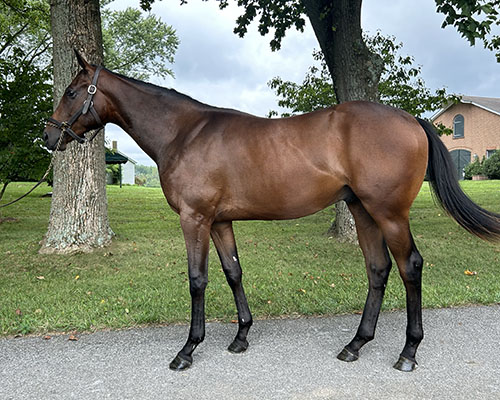
A young Corona de Oro with his nurse mare Special Skippy: